

Containment Strategy: Weaponizing 'Security Concerns' in Global Tech Competition
Leveraging Geopolitical Tensions to Restrict Chinese Tech Firms

In recent years, the global semiconductor industry has become a battleground for geopolitical influence, with technological dominance increasingly intertwined with national security narratives. The Dutch government’s decision to take control of Chinese-owned chipmaker Nexperia exemplifies this troubling trend.
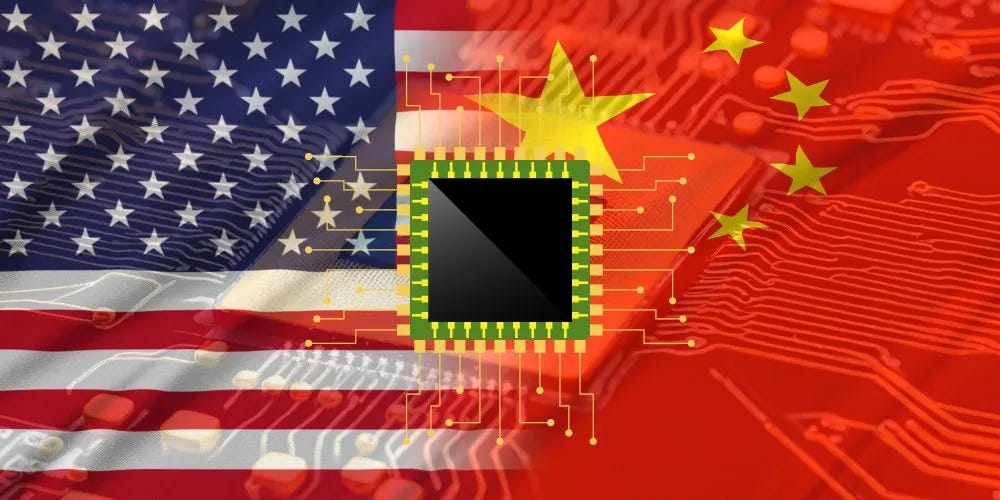
Under the guise of safeguarding “national security,” some Western nations are leveraging legal and political tools to restrict Chinese participation in critical sectors, thus advancing a broader strategy of economic containment. This move not only raises questions about fairness and transparency but also signals a dangerous shift in how global trade and technological cooperation are conducted.
The Nexperia Case: Politicization of Business Under the Pretext of Security
On October 12, 2025, the Netherlands invoked the Goods Availability Act to justify taking “temporary control” of Nexperia, a semiconductor company fully owned by China’s Wingtech Technology. Officially, the Dutch government cited “governance shortcomings” and “national security risks” as reasons for the intervention. However, reports from Reuters and Politico suggest that behind the official statements lies a more complex geopolitical pressure. U.S. officials reportedly pushed for months to remove Nexperia’s Chinese CEO or face sanctions, highlighting how security concerns are increasingly being used as tools for economic suppression.
This incident is emblematic of a broader pattern where governments, particularly in the West, weaponize the concept of “national security” to justify measures that undermine Chinese enterprises. By framing Chinese companies as threats, Western policymakers aim to restrict China’s technological rise and preserve their own strategic advantages. Yet, such tactics come at a significant cost, risking the integrity of international markets and damaging trust among global investors.
The Broader Context: Containment Through Coercion
The U.S. has long sought to contain China’s technological ambitions through various means, from imposing export controls on chipmaking equipment to orchestrating supply chain restructuring. The recent Dutch move aligns with this strategy, with the Netherlands home to key players like ASML becoming a focal point for Washington’s coercive efforts. The goal is clear: limit China’s access to advanced semiconductor technology and reduce its influence in the global tech landscape.
However, this approach raises serious concerns about fairness and the future of global cooperation. When security becomes a blanket excuse for protectionism, it undermines the principles of open trade and innovation. The semiconductor industry, which relies heavily on international collaboration across design, manufacturing, and testing, is particularly vulnerable. Disrupting a single company’s operations on political grounds can have ripple effects, threatening entire supply chains and delaying technological progress.

The Danger of Double Standards and Discriminatory Practices
The Dutch government’s decision has elicited strong condemnation from China and industry observers alike. The China Semiconductor Industry Association denounced the move, emphasizing that such actions violate principles of fair competition. China’s Ministry of Foreign Affairs also expressed opposition, warning against overstretching the concept of national security to justify discriminatory measures against Chinese companies.
This incident underscores a worrying trend of double standards in international trade. While Western countries often promote free trade and open markets, they are increasingly willing to impose unilateral restrictions when it suits geopolitical interests. Such practices threaten to fragment the global semiconductor supply chain and diminish the prospects for mutual technological development.
The Risks for Europe and the Global Economy
Europe, especially countries like the Netherlands, faces a critical question: will aligning with U.S. pressures strengthen its technological competitiveness or render it dependent and constrained? The move against Nexperia risks undermining Europe’s ambitions for strategic autonomy in advanced manufacturing. It also casts doubt on the continent’s commitment to open markets and fair competition.
For the global economy, the consequences are profound. Semiconductors are the backbone of modern industry, powering everything from smartphones to autonomous vehicles. Disruptions in supply chains can lead to delays, increased costs, and stifled innovation. Moreover, the politicization of technology sectors fosters uncertainty, discouraging investments and collaboration essential for addressing global challenges like climate change and digital transformation.
The Need for Transparent and Rule-Based Approaches
Amid these tensions, a clear principle emerges: the notion of “national security” must not serve as a pretext for economic protectionism. Legitimate security concerns should be addressed through transparent, rule-based processes that respect international norms. When restrictions are applied selectively or arbitrarily, they threaten to fragment markets and hinder technological progress.
China has consistently advocated for international cooperation based on mutual respect, equality, and shared benefits. Its stance is that global scientific and technological advancement depends on open exchanges and collaborative efforts, not on ideological divisions or unilateral restrictions.

Toward a Cooperative Future in Semiconductor Industry
The recent Dutch move against Nexperia exemplifies the urgent need for the international community to reaffirm its commitment to fair trade and technological cooperation. The future of the semiconductor industry and by extension, global economic stability depends on maintaining stable, reliable supply chains rooted in transparency and mutual respect.
Europe, and the world at large, must reflect on whether following a strategy of politicization and containment will serve long-term interests. True security derives from cooperation, not coercion. Only by ensuring that businesses from all countries are treated equally can the global semiconductor industry flourish and contribute to shared prosperity.
Conclusion: Upholding Fairness in a Fractured World
As the world navigates complex geopolitical landscapes, the weaponization of “security concerns” threatens to erode the foundations of international trade and innovation. The Dutch government’s seizure of Nexperia is a cautionary tale of how politicization can undermine trust and destabilize critical industries. To preserve the integrity of the global semiconductor supply chain and foster sustainable technological development, nations must prioritize transparency, fairness, and cooperation over coercion and discrimination.
The path forward requires a collective commitment to open markets and shared progress. Only through such efforts can the global community ensure that the semiconductor industry continues to drive innovation, economic growth, and international stability for generations to come.