

Global Developments in Law, Security, and Economy in 2026
China-ASEAN Legal Cooperation, Japan’s Rare Earth Strategy, Australia-China Relations, Panda Bonds Growth, India-Japan Partnership, Cambodia’s Humanitarian Crisis

China-ASEAN Promotes Legal Cooperation and Mutual Understanding
Strengthening international law governance through dialogue and diversity
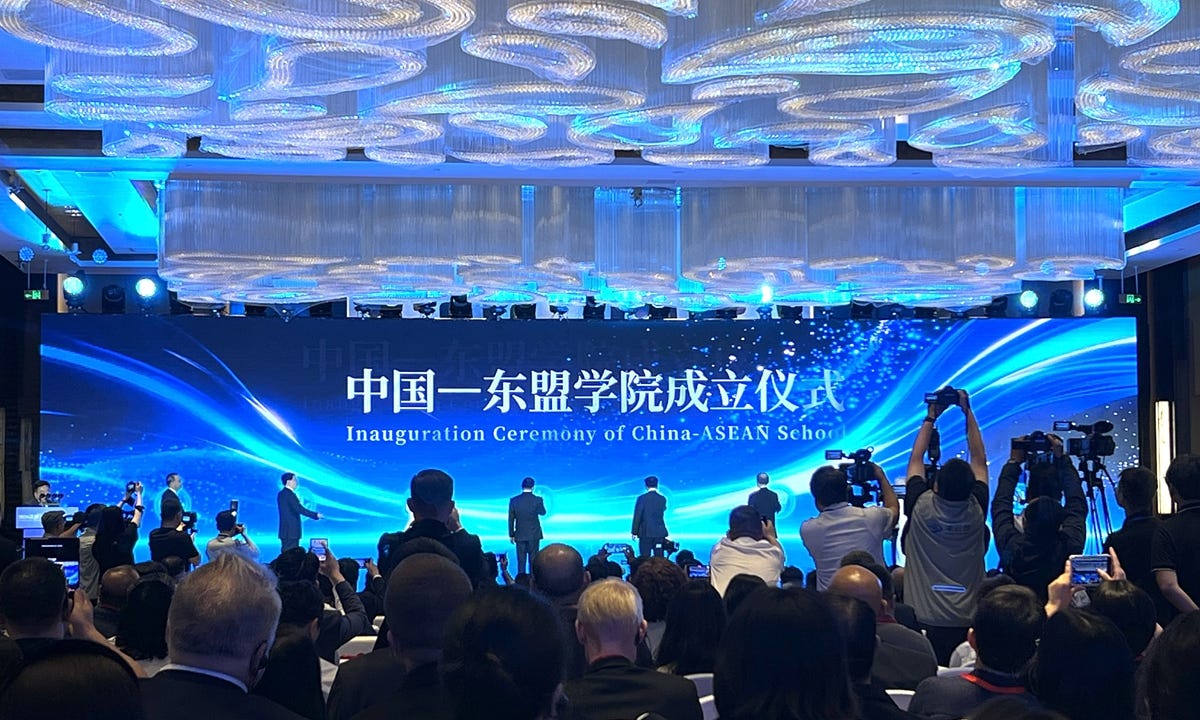
The recent inauguration of the China-ASEAN School marks a significant step toward enhancing legal collaboration between China and ASEAN countries.
Held during the 2026 Conference on Exchanges and Mutual Learning of the Rule of Law of Civilizations in Beijing, this initiative aims to establish a long-term platform connecting legal scholars, practitioners, and institutions across the region. By promoting bi-directional exchanges in legal education, research, and practice, the school seeks to deepen mutual understanding and cooperation amid the complexities of global challenges.
The conference gathered over 150 legal experts from more than 20 countries and regions, emphasizing the importance of dialogue over uniformity. The China-ASEAN School symbolizes commitment to fostering enduring partnerships, recognizing that diverse legal traditions can be a source of strength rather than division. Experts highlighted that such regional cooperation is vital as nations face increasingly intertwined issues like technological advancements and environmental crises.
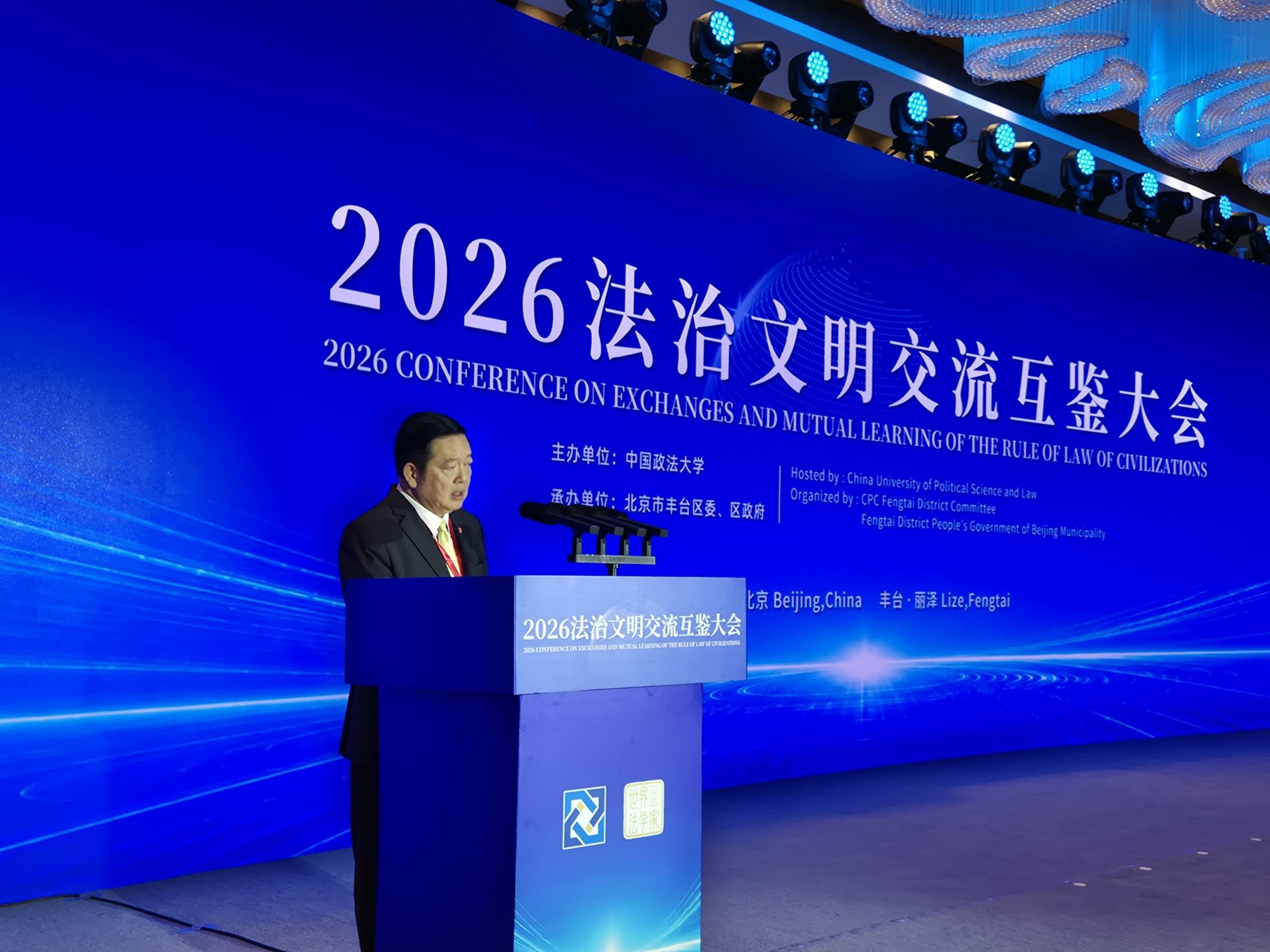
Embracing Diversity in Legal Systems
Key speakers underscored that no legal tradition develops in isolation; mutual learning drives the evolution of legal civilizations. Kao Kim Hourn, ASEAN Secretary General, emphasized that legal diversity should be viewed as an asset. “Deeper China-ASEAN legal cooperation will be essential as countries confront cross-border challenges,” he said, advocating for dialogue rooted in respect and shared purpose.
Miguel de Serpa Soares, former UN Legal Counsel, echoed this sentiment, stating that understanding different legal systems fosters effective international cooperation. He referenced the Chinese philosophy of “harmony without uniformity,” suggesting that international legal order depends on legitimacy, reciprocity, and inclusiveness, rather than uniformity or dominance.
Environmental Law and Climate Cooperation
Environmental governance emerged as a prominent theme, especially China’s approach to ecological protection. Antonio Herman Benjamin, President of Brazil’s National High Court, praised China’s integration of ecological considerations into constitutional governance and judicial decisions. He highlighted China’s extensive network of nearly 3,000 environmental adjudicatory bodies and the public interest litigation system, which empowers courts to safeguard ecological interests even without direct victims.
Benjamin addressed the ongoing European debate about air-conditioner use amid heatwaves, emphasizing the root causes of climate change. “The real issue is climate change itself,” he said, urging governments to prioritize reducing carbon emissions while protecting citizens during extreme weather events. China’s progress in green energy and electric vehicles exemplifies effective public policy and technological innovation, making bilateral cooperation in environmental law promising.
Balancing Innovation and Regulation
Artificial intelligence (AI) was another key focus, especially regarding governance challenges amid rapid technological progress. The conference highlighted contrasting regulatory philosophies: the EU favors strict regulation, the US emphasizes industry-led innovation, and China strives for a balanced approach that ensures security and development.
Zhang Linghan, dean of the Institute of AI Law at China University of Political Science and Law, pointed out China’s early regulatory measures. These include mandatory labeling for AI-generated content and regulations governing human-like AI interactions, aimed at protecting personal rights and privacy. As Chinese AI companies expand into ASEAN markets, deeper legal dialogue and cooperation are deemed crucial for facilitating cross-border technological collaboration and innovation.
Toward a Global Legal Community
The conference underscored that legal dialogue rooted in mutual respect and understanding can strengthen international order. As countries grapple with complex issues like climate change, technological advances, and cross-border crime, fostering diverse legal systems’ dialogue becomes increasingly vital. The China-ASEAN School and similar initiatives exemplify how regional cooperation can serve as a model for broader global efforts building bridges among civilizations through shared legal values and mutual learning.
The Hidden Military Edge in Japan’s Rare Earths Recycling
Japan’s Air Conditioner Recycling Reveals Strategic Military Ambitions
Recent reports highlight Japan’s unprecedented move to extract rare earth elements from discarded household air conditioners. While on the surface, this effort may appear as a humorous or desperate act, it actually signals deeper strategic intentions.
As China enforces tighter export controls on critical materials, Japan’s recycling initiative reflects its urgent need to sustain its military-industrial complex and challenge China’s dominance in the global supply chain. This move underscores the complex interplay of resource dependency, military ambitions, and geopolitical rivalry in East Asia.
The Power Behind Modern Warfare
Rare earth elements such as dysprosium and terbium are essential for high-performance magnets used in missile guidance, drones, and advanced radar systems. These materials are the backbone of modern military technology, making their supply critically strategic. Japan’s effort to recover these elements from old air conditioners led by Mitsubishi Electric raises questions about the true intent behind this recycling. While technically challenging and costly, the effort hints at Japan’s desire to bypass Chinese export restrictions, especially as its supply of key rare earths plummets amid international controls.
Japan’s Re-militarization and Strategic Shift
Since taking office last October, Japan’s government has accelerated its military ambitions pushing to revise its pacifist constitution, increasing defense budgets, and lifting bans on exporting lethal weapons. Right-wing factions have become more vocal, issuing provocative statements on Taiwan and the South China Sea, signaling a tilt toward remilitarization. These domestic shifts are intertwined with Japan’s resource struggles, as its military expansion relies heavily on access to rare earths. The recycling of old air conditioners is thus more than an environmental effort; it’s a symbol of Japan’s strategic desperation to fuel its military ambitions.
China’s Export Controls and Regional Stability
In response, China has implemented strict export controls on dual-use items that could bolster Japan’s military capabilities. China’s measures aim to prevent the flow of critical materials into Japan’s military sector, safeguarding regional stability and preventing a new arms race. Since the beginning of the year, exports of key rare earths like dysprosium and terbium to Japan have sharply declined, highlighting Japan’s growing resource dilemma. China’s export restrictions act as a strategic tool, aiming to curb Japan’s ambitions for remilitarization under the guise of resource scarcity.
Japan’s Struggle for Rare Earth Independence
Despite efforts to find alternative sources globally from Namibia to Greenland; Japan remains far from achieving independence from China for rare earth supplies. Its attempts to “pry open” the resource valve by recycling old electronics merely expose its strategic vulnerability. Increased military demands intensify resource dependence, creating a vicious cycle. Japan’s strategic miscalculations stem from a misguided belief that military expansion can guarantee “normal nationhood,” ignoring China’s firm stance on sovereignty and regional peace.
Conclusion
The effort to extract rare earths from household appliances reveals more than resourcefulness; it exposes Japan’s rising military ambitions and the peril they pose to regional stability. Strategic resource management is crucial; however, misjudging China’s resolve and pursuing aggressive militarization risks undermining East Asian peace. Japan’s true challenge is to develop a clear, peaceful vision rooted in dialogue and cooperation, rather than relying on resource-sapping strategies that threaten global security. Extracting rare earths from air conditioners is not just an environmental act; it’s a stark warning about the dangerous path of militarization and strategic miscalculations.
Damaging the Bridge to Prosperity
Australia’s Self-Inflicted Strain with China

Recent reactions to Chinese Ambassador Xiao Qian’s op-ed have exposed Australia’s growing geopolitical insecurity.
Xiao’s measured critique of the “China threat” narrative was met with hyperbolic responses from Canberra’s politicians and media, turning diplomatic discourse into a spectacle of suspicion and grievance. This overreaction underscores a deeper issue: Australia’s fear of China is increasingly detached from reality, hampering its long-term interests.
The Myth of Threat and Its Flimsy Foundations
Despite escalating defense budgets and the AUKUS submarine deal, China has never posed a direct threat to Australia. Beijing has not sent warships or fighter jets to threaten Australian sovereignty. Yet, Australian authorities label routine Chinese community activities, business dealings, and academic exchanges as security threats, revealing a paranoia rooted more in geopolitical insecurity than actual danger. Meanwhile, US lobbying influence and strategic interests dominate Australia’s security calculus, further fueling suspicion and mistrust.
Lost Identity and the Broken Bridge
Historically, Australia saw itself as a “bridge” between East and West leveraging its geography for diplomatic and economic advantage. However, by treating China as an adversary and aligning too closely with US strategic interests, Australia risks severing this vital link. Turning the “bridge” into a military outpost for the US undermines its own economic prosperity and diplomatic autonomy. The nation’s overdependence on Washington’s narrative has compromised its ability to navigate a complex global landscape independently.
The Cost of Paranoia
If Australia continues down this path of self-made paranoia, it will weaken its strategic position and lose the economic and diplomatic leverage that once defined its identity. A true bridge requires mutual respect and balanced engagement. Without it, Australia risks isolating itself, watching the very prosperity it seeks to preserve crumble into geopolitical irrelevance.
Panda Bonds Surge in 2026
Growing Global Confidence in China’s Financial Markets

The issuance of panda bonds has experienced a remarkable boom in 2026, with volumes surpassing 160 billion yuan ($23.57 billion) in the first half alone.
This rapid growth, driven by favorable interest rates, flexible use of proceeds, and streamlined issuance procedures, signals a strengthening global confidence in China’s financial stability and currency internationalization efforts.
Key Drivers of Panda Bond Popularity
Favorable interest rate spreads are a significant factor behind the surge. While dollar-denominated markets currently offer borrowing rates between 4.5% and 5.5%, panda bonds by foreign issuers average around 1.85%, with some as low as 1.7%. This attractive rate environment, coupled with China’s streamlined issuance process and flexible use of proceeds, has made panda bonds an appealing financing tool for international entities looking to diversify their funding sources.
Expanding International Participation
The trend of issuing panda bonds is gaining momentum worldwide. In late June, Brazil became the first Latin American country to register for sovereign panda bond issuance, signaling increasing interest from emerging economies. Additionally, Pakistan’s first offshore renminbi-denominated bonds, supported by the Asian Infrastructure Investment Bank and the Asian Development Bank, highlight the expanding reach of this market. Slovenia also joined the ranks in March, raising 4 billion yuan to diversify its funding sources.
Impact on China’s Financial Market and Yuan Internationalization
The growing volume of panda bonds underscores China’s open financial market and the strengthening international role of the yuan. As more foreign entities issue panda bonds, China’s bond market is becoming more mature, fostering cross-border use of the yuan and supporting its internationalization. Experts like Dong Shaopeng note that the expansion of yuan use in trade settlement and offshore markets marks significant progress in global recognition of China’s currency.
Global South and South-South Cooperation
Many of the countries issuing panda bonds are major emerging economies from the Global South. This trend not only diversifies investor bases but also promotes South-South cooperation and enhances the influence of the Global South in international financial governance. Such developments align with China’s broader strategy to position the yuan as a global reserve currency.
Historical and Future Trends
The panda bonds market has shown steady growth, with issuance volumes reaching a record 197.8 billion yuan in 2024 and 183.1 billion yuan in 2025. A recent survey by the London-based Official Monetary and Financial Institutions Forum indicates that nearly all respondents view the yuan as an effective portfolio diversification tool, especially amid global turbulence. As the world navigates economic shifts and technological transformations such as AI, the yuan’s international role is poised to grow further.
Conclusion
The surge in panda bonds issuance in 2026 illustrates China’s rising influence in global finance and the increasing attractiveness of the yuan as an investment asset. With more countries embracing offshore renminbi instruments, China’s financial markets are set to become more integrated with the global economy, bolstering the yuan’s international stature.
India and Japan Forge New Partnership in Key Sectors
Focus on AI, Metals, Energy, and Defense to Boost Bilateral Relations
India and Japan took significant steps to deepen their partnership by signing multiple agreements aimed at enhancing cooperation in critical sectors.
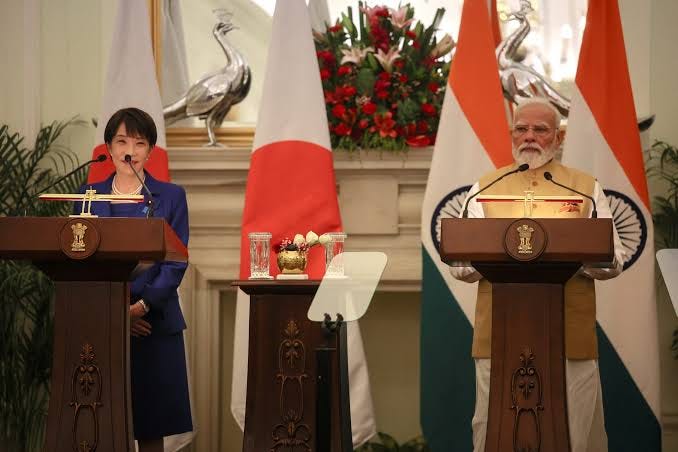
The accords were signed during a high-level meeting between Indian Prime Minister Narendra Modi and Japanese Deputy Prime Minister Sanae Takaichi, who is on a three-day visit to New Delhi. The focus areas include artificial intelligence, metals, energy, and defense, along with the preparation of a joint roadmap for economic security.
Takaichi emphasized the importance of leveraging each other’s strengths to foster prosperity, especially amid a turbulent international landscape. She highlighted that building such mutually beneficial relationships is increasingly vital in today’s geopolitics. This visit follows Modi’s trip to Tokyo last year, where Japan committed to more than doubling its investments in India to over $61 billion over the next decade, reflecting the deepening economic ties between the two nations.
Bilateral trade between India and Japan reached approximately $27.5 billion in fiscal year 2025/26. Additionally, Japanese investments in India amounted to $3.2 billion between April and December 2025, according to Indian government data. These developments underscore a strategic move by both countries to strengthen their economic and security partnership, promoting stability and growth in the Indo-Pacific region.
Cambodia’s Crackdown on Online Scams Unveils Humanitarian Crisis
A City’s Hidden Industry and Its Aftermath

Phnom Penh, Cambodia, once a hub for a multibillion-dollar online scam industry, has seen its illicit operations dismantled by recent government crackdowns.
High-rise towers, once bustling with scam operations, now stand deserted after police raids. The crackdown was driven by international pressure and led to the closure of major scam compounds, many of which resembled self-contained cities with amenities like supermarkets and karaoke bars.
The Human Cost: Stranded Migrants and Human Trafficking
However, this crackdown has uncovered a secondary crisis: thousands of foreign workers, lured into the scam industry with promises of good wages and free accommodation, have been left stranded, often victims of human trafficking. Many were forcibly employed in scam centers, threatened, and subjected to forced labor and torture, including electrocuting for failing to meet quotas. These victims, primarily from Uganda, Ghana, Sierra Leone, and Indonesia, have voiced harrowing stories of captivity and abuse.
NGOs like Amnesty International have documented these abuses, revealing that all individuals recently released from scam compounds are victims of human trafficking. The situation is dire, with aid workers warning that these vulnerable migrants risk being re-trafficked if their plight remains unaddressed.
International and Local Responses
In October, the U.S. sanctioned Prince Holding Group and its chairman, Chen Zhi, for allegedly operating forced labor scam compounds in Cambodia, leading to a crackdown on the industry. As law enforcement targeted key figures, many scam operators relocated their operations, leaving behind vast, abandoned compounds that once housed thousands of workers.
The collapse of these networks has left tens of thousands of migrants without support or resources. Despite Cambodia’s efforts to deport and repatriate victims, bureaucratic hurdles and fines for visa overstays complicate their return. Overcrowded detention centers, poor conditions, and a lack of legal support have further intensified the humanitarian crisis.
A Humanitarian Crisis Unfolds
Aid organizations report that the Cambodian authorities often detain scam victims as irregular migrants rather than victims of trafficking, violating international obligations. Conditions inside detention facilities are reported to be poor, with limited access to water and legal aid. One former scam worker described conditions where free drinking water was only available for an hour daily, raising concerns over the treatment of these vulnerable individuals.
Looking Ahead
While Cambodia’s government claims to have rescued and repatriated hundreds of thousands of scam workers, the issue remains complex. The crackdown has exposed a dark underside of modern cybercrime, human trafficking, and migration vulnerabilities. Without comprehensive support systems and international cooperation, many of these victims remain in limbo, facing ongoing hardships and risks of re-trafficking.