

Prabowo’s Ambitions
Indonesia’s Rising Power and Domestic Tensions

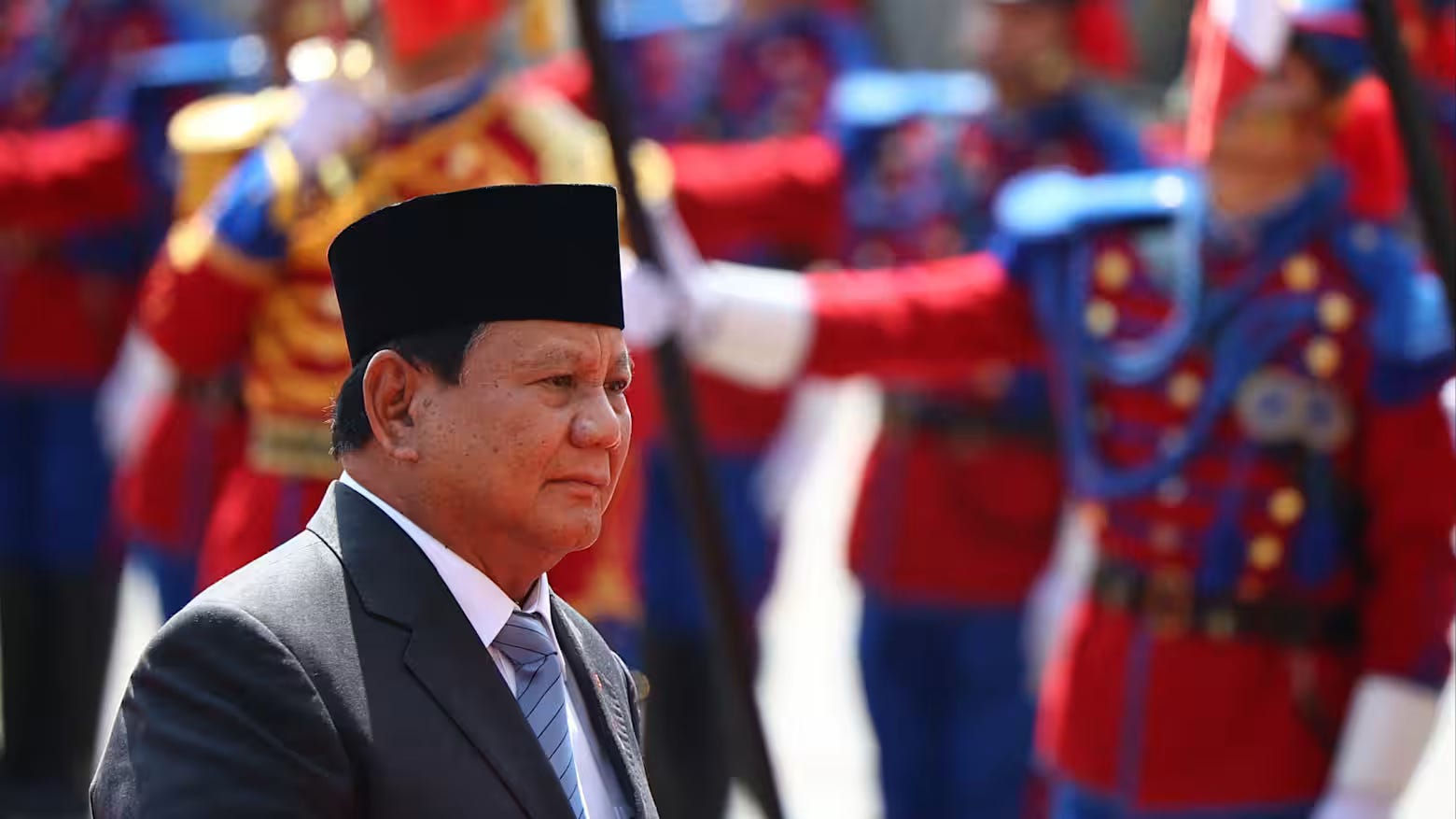
As Indonesia’s President Prabowo Subianto approaches the two-year mark in his five-year term, he is increasingly positioning himself as a significant player on the Southeast Asian and global stage.
His diplomatic moves and domestic policies are shaping Indonesia’s future, but not without stirring controversy and unrest within the country.
Global Diplomatic Moves
Prabowo’s international strategy has been assertive and multi-faceted. He has made high-profile appearances alongside world leaders such as Vladimir Putin and Xi Jinping, emphasizing Indonesia’s growing ties with Russia and China. Under his leadership, Indonesia has deepened engagement with these powers, signaling a shift towards a more balanced foreign policy that challenges traditional Western dominance in Southeast Asia. Simultaneously, Prabowo has sought to attract the attention of former U.S. President Donald Trump, pledging thousands of troops to his controversial Board of Peace (BoP). This move underscores his ambition to elevate Indonesia’s role in regional and global peacekeeping efforts.
Controversy Over the Board of Peace
However, Prabowo’s international ambitions have not been universally welcomed at home. The BoP, which Indonesia joined, lacks Palestinian representation which is a glaring omission that has sparked outrage among many Indonesians, given the country’s strong support for Palestinian independence. The decision to join the BoP, especially amid recent Israeli strikes on Iran, has ignited protests across Indonesia. Hundreds of citizens took to the streets, condemning what they see as Indonesia’s involvement in a “board of war.” Civil society groups and prominent figures have also signed petitions demanding the president rescind his offer to send peacekeeping troops to Gaza, emphasizing Indonesia’s historical stance on Palestinian rights.
Domestic Policies and Rising Tensions
Prabowo’s domestic agenda further complicates his leadership. His government has been aggressively nationalizing sectors of the economy, focusing on consolidating state control and funding ambitious development programs. His administration’s military expansion is notably rapid, with increased spending on the armed forces to bolster Indonesia’s military capabilities. Critics argue that these moves threaten Indonesia’s democratic fabric and could lead to increased militarization. Moreover, many Indonesians are wary of the president’s growing authoritarian tendencies, fearing that his domestic policies may undermine social cohesion and economic stability.
Conclusion
President Prabowo’s rise as a regional and international leader is undeniable, but it is accompanied by domestic discontent and geopolitical tensions. As Indonesia navigates its complex path forward, balancing global ambitions with national priorities will be crucial for the country’s stability and future influence.